
The Mahindra Bolero has been a household name in India for more than two decades. While most SUVs have evolved with premium interiors, advanced technology, and modern styling, the Bolero has stayed true to its roots. It continues to be a rugged workhorse designed to tackle rough roads, rural terrain, and demanding daily use.
For 2026, Mahindra has given the Bolero a subtle update rather than a complete redesign. The latest model introduces a new top-spec B8 variant, refreshed styling, revised suspension tuning, and a few additional comfort features. However, it still retains the old-school character that has made it one of India’s most trusted utility vehicles.
So, does the updated Bolero still deserve a place on your shortlist, or has it fallen behind modern rivals? Here’s our detailed review.
Exterior Design
At first glance, the 2026 Bolero looks instantly familiar. Mahindra has wisely retained its iconic boxy silhouette, giving it a commanding road presence that many buyers continue to appreciate.
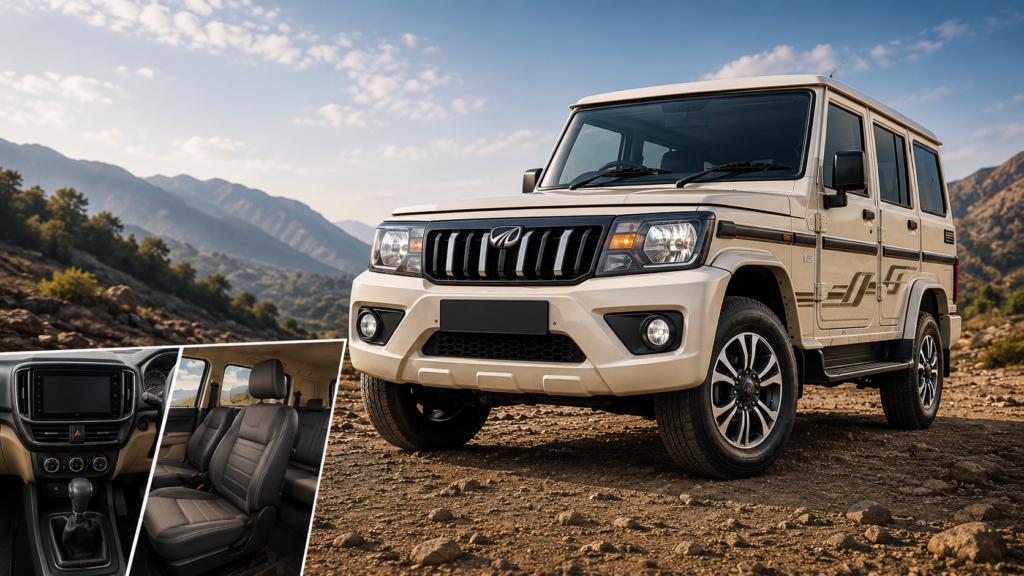
The front end now features a redesigned grille, while the metal front bumper has been updated with integrated fog lamps for a more modern appearance. The top-spec B8 variant also gets stylish 15-inch diamond-cut alloy wheels, adding a premium touch without changing the SUV’s rugged personality.
Despite these updates, the Bolero proudly holds on to several traditional design elements that have become part of its identity. These include manually adjustable ORVMs, pull-type door handles, a roof-mounted antenna, and the externally mounted spare wheel on the tailgate.
Although it may not look as contemporary as rivals like the Mahindra XUV 3XO or Tata Nexon, the Bolero’s straightforward design remains practical and purposeful.
Interior and Cabin Experience
Step inside, and you’ll immediately notice that the Bolero has been designed with durability rather than luxury in mind.
The dashboard is constructed almost entirely from hard plastics that can withstand years of rough usage. While the materials don’t feel premium, they are easy to clean and well suited for rural environments where durability matters more than aesthetics.
The biggest update inside the cabin is the addition of a 7-inch touchscreen infotainment system. Bluetooth connectivity is available, allowing users to stream music and make hands-free calls. However, the system does not offer built-in Android Auto or Apple CarPlay. Instead, users must rely on a separate smartphone app and screen-mirroring solution, which feels outdated compared to competitors.
The new B8 variant also introduces leatherette seat upholstery, giving the cabin a more premium appearance. While these seats look attractive, they tend to become quite warm during summer, especially when the vehicle is parked in direct sunlight.
Driver Comfort
One area where the Bolero clearly shows its age is driving ergonomics.
The steering wheel lacks reach and height adjustment, making it difficult for some drivers to find a comfortable seating position. The pedal placement also requires the driver to sit slightly farther back than expected, and the absence of a dead pedal reduces comfort during long journeys.
Visibility, however, remains excellent thanks to the SUV’s upright seating position and large windows.
Another highlight is the powerful air-conditioning system. The front AC cools the cabin remarkably quickly, even in extreme summer conditions. Unfortunately, passengers in the second row do not get dedicated rear AC vents, meaning cooling takes longer for those sitting behind.
Space and Practicality
The Bolero continues to offer a spacious cabin for five occupants.
The second-row bench provides a commanding view of the road and decent shoulder room. While headroom is generous, legroom can become slightly limited if the front seats are pushed all the way back for taller drivers.
The rear side-facing jump seats remain one of the Bolero’s biggest compromises. These seats are extremely cramped for adults and, more importantly, do not feature proper seatbelts. They are better suited for carrying luggage or occasional short-distance use rather than transporting passengers regularly.
For buyers who frequently travel with five people or need a durable utility vehicle, the Bolero remains practical. However, families looking for comfortable seven-seat travel should consider more modern alternatives.
Safety
Mahindra has equipped the 2026 Bolero with basic safety features, including:
- Dual front airbags
- ABS with EBD
- Front seatbelt reminders
- Reverse parking sensors
However, compared to newer SUVs in this price range, the Bolero feels outdated.
It still misses important safety technologies such as Electronic Stability Program (ESP), while the second-row passengers continue to use manual, non-retractable aircraft-style seatbelts that are inconvenient to wear and less user-friendly than modern retractable belts.
Although the Bolero has built a reputation for toughness, buyers expecting modern safety standards may find its equipment list lacking.
Engine and Performance
Powering the 2026 Mahindra Bolero is the familiar 1.5-litre, three-cylinder mHawk turbo diesel engine. It produces 76 hp and 210 Nm of torque, with peak torque arriving at just 1,600 rpm. On paper, these figures may not seem impressive, but the Bolero performs better than expected in everyday driving.
The engine feels responsive at low speeds, making the SUV surprisingly easy to drive through city traffic and narrow village roads. Turbo lag is minimal, and the strong low-end torque allows the Bolero to move confidently even when fully loaded with passengers or luggage.
The Bolero is paired with a 5-speed manual gearbox. Gear shifts are straightforward, although the transmission does not feel as refined or smooth as those found in more modern SUVs. For buyers who prefer a simple and reliable mechanical setup, however, it gets the job done.
At lower engine speeds, the diesel motor remains reasonably refined. Once the revs climb, particularly on highways, engine noise becomes more noticeable. Wind and road noise also enter the cabin at speeds above 100–110 km/h, reminding occupants that the Bolero has been designed primarily for durability rather than long-distance highway comfort.
In terms of fuel efficiency, the Bolero continues to be economical for a diesel SUV. Real-world mileage is expected to remain one of its strongest selling points, especially for buyers covering long distances every day.
Ride Quality and Handling
The Bolero continues to use its rugged leaf-spring rear suspension, which has been slightly revised for 2026 to improve comfort.
At low speeds, the suspension absorbs potholes, broken roads, and uneven village tracks reasonably well. This makes the SUV feel extremely capable on rough terrain where many crossovers struggle.
However, the suspension setup also results in a bouncy ride. Passengers are likely to feel more movement over speed breakers and uneven surfaces, while larger bumps send noticeable shocks through the steering wheel.
On highways, the Bolero is stable enough for normal cruising, but it is not designed for enthusiastic driving. The tall body and suspension setup result in significant body roll around corners, so drivers need to take turns at moderate speeds.
This is not an SUV built for sporty handling. Instead, it prioritises durability and the ability to handle poor road conditions without complaint.
Pricing
The 2026 Mahindra Bolero is priced between approximately ₹8 lakh and ₹9.91 lakh (ex-showroom), depending on the chosen variant.
With the introduction of the new B8 variant, buyers now receive additional convenience features, updated styling, and leatherette seats without a dramatic increase in price.
For customers looking for a dependable utility vehicle rather than a feature-loaded urban SUV, the Bolero continues to offer strong value.
Pros
- Rugged and durable construction
- Excellent low-end diesel torque
- Reliable mechanical package
- Comfortable on rough rural roads
- Strong air-conditioning performance
- Good fuel efficiency
- Affordable maintenance and widespread service support
Cons
- Outdated cabin design
- No built-in Android Auto or Apple CarPlay
- Limited safety features compared to rivals
- Poor highway refinement
- Significant body roll while cornering
- Rear jump seats are cramped and unsuitable for regular passengers
- No rear AC vents
Rivals
The Mahindra Bolero competes with several vehicles depending on the buyer’s priorities.
The Maruti Suzuki Jimny offers far better off-road capability and modern technology but comes at a significantly higher price.
The Mahindra Bolero Neo provides a more refined driving experience while retaining the rugged character buyers expect from the Bolero family.
For urban buyers, SUVs like the Tata Nexon, Mahindra XUV 3XO, Hyundai Venue, and Kia Sonet offer better comfort, more features, stronger safety packages, and improved highway performance.
However, none of these rivals match the Bolero’s simple mechanical design and reputation for handling rough rural conditions with ease.
Should You Buy the 2026 Mahindra Bolero?
The answer depends entirely on how you plan to use your vehicle.
If your daily commute involves city traffic, frequent highway travel, or you want modern technology such as connected features, a premium infotainment system, and advanced safety equipment, there are better alternatives available within the same budget.
However, if you live in a rural area, frequently drive on broken roads, carry heavy loads, or simply want a dependable SUV that is inexpensive to maintain, the Bolero remains one of the strongest options available.
Its rugged construction, proven diesel engine, and excellent reliability continue to make it a favourite among government departments, commercial users, and buyers who prioritise practicality over luxury.
Auto360Info Verdict
The 2026 Mahindra Bolero proves that not every vehicle needs to chase the latest trends. While most modern SUVs focus on larger touchscreens, panoramic sunroofs, and connected technology, the Bolero stays true to its original purpose: delivering dependable performance in the toughest conditions.
The latest update brings welcome improvements such as the new B8 variant, refreshed styling, revised suspension tuning, and a touchscreen infotainment system. These additions make the Bolero feel slightly more modern without compromising its rugged character.
That said, the SUV is beginning to show its age. The outdated cabin, limited safety equipment, lack of built-in smartphone connectivity, and basic driving ergonomics make it difficult to recommend as an everyday urban family car.
For buyers who need a tough, reliable, and easy-to-maintain SUV capable of handling poor roads better than most modern crossovers, the 2026 Mahindra Bolero still deserves serious consideration. It may not be the most refined SUV under ₹10 lakh, but it remains one of the toughest.