
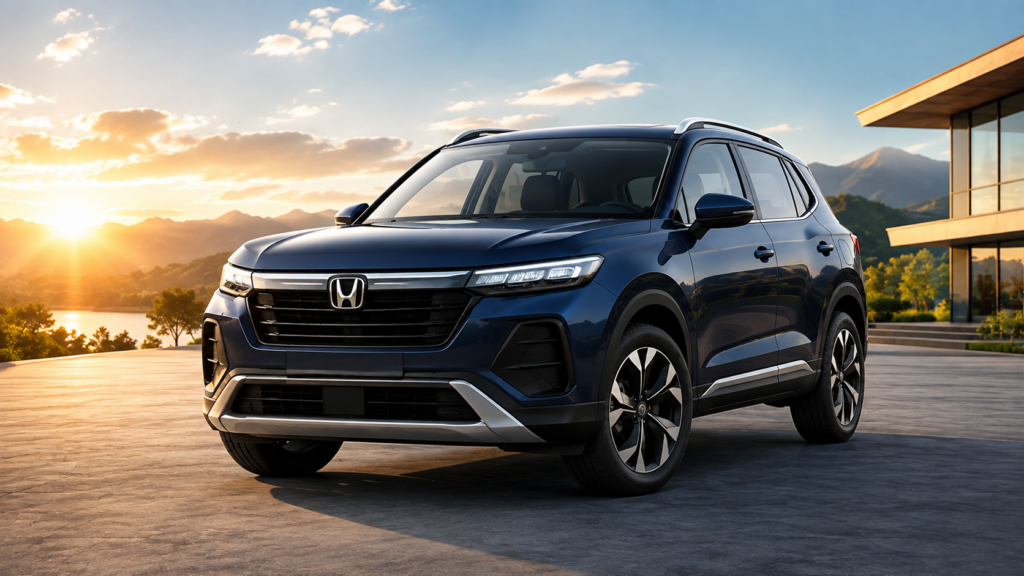
The Honda Elevate entered India with a strong reputation behind it. Honda’s reliability, a naturally aspirated petrol engine and a practical SUV design gave it several advantages on paper. However, the midsize SUV segment has become one of the most competitive spaces in the Indian market, with the Hyundai Creta, Kia Seltos, Maruti Suzuki Grand Vitara and Toyota Urban Cruiser Hyryder offering buyers a wider range of features and powertrain choices.
Despite its strengths, the Elevate has struggled to build consistent sales momentum. According to the video analysis, its monthly sales have generally remained in the 1,000–2,000-unit range, with its best months reaching around 5,000 units.
So, what exactly works in the Honda Elevate, and where does it lose out to its rivals? Here is a detailed SWOT analysis.
Honda Elevate Strengths
Powerful and Reliable 1.5-Litre Naturally Aspirated Engine
One of the biggest strengths of the Elevate is its 1.5-litre naturally aspirated petrol engine. The engine produces around 121 PS and 145 Nm and is available with either a six-speed manual gearbox or a CVT automatic.
Unlike several rivals that have moved towards smaller turbocharged engines, Honda has retained a naturally aspirated setup. It may not deliver the instant punch of a turbo-petrol engine, but it offers linear power delivery and predictable performance.
More importantly, Honda’s petrol powertrain has a strong reputation for reliability and relatively hassle-free ownership, which remains a major selling point for buyers planning to keep their SUV for many years.
Strong Safety Package
Safety is another important advantage. The Elevate comes equipped with Honda SENSING ADAS technology, along with features such as six airbags, vehicle stability assist, hill-start assist, LaneWatch and rear parking sensors.
The SUV also feels planted and reassuring at higher speeds, giving it a sense of solidity that many buyers appreciate.
Bold Road Presence
The Elevate may not be the largest SUV in its class, but its upright proportions, large grille and squared-off design give it a commanding road presence.
This is particularly useful for buyers who prefer a conventional SUV appearance instead of the increasingly coupe-inspired designs seen across the segment.
Spacious and Practical Cabin
The interior is another area where the Elevate performs well. Honda designed the SUV around practicality, with good headroom, legroom and usable cabin space.
The boot is particularly impressive at 458 litres, according to Honda’s current specifications.
The rear seat can comfortably accommodate four adults and a child, while three-point seatbelts and headrests are provided for all three rear passengers.
Straightforward Everyday Usability
The Elevate deliberately avoids turning every function into a touchscreen operation. Physical controls, conventional ergonomics and straightforward seat adjustments make the SUV easy to use on a daily basis.
For buyers who value simplicity over a cabin filled with screens and electronic functions, this can actually be a major advantage.
Honda Elevate Weaknesses
Missing Features Expected in This Segment
The biggest criticism against the Elevate is its equipment list.
Features such as ventilated seats, a panoramic sunroof and a factory-fitted 360-degree camera are either missing or unavailable as standard depending on the variant and accessory configuration. Honda currently lists a 360-degree surround-view camera as an optional accessory.
This becomes a problem when rivals offer increasingly feature-rich cabins.
Cabin Feels Too Basic
The Elevate’s interior prioritizes functionality, but it doesn’t necessarily deliver the premium experience many buyers expect from a modern midsize SUV.
The partially digital instrument cluster, relatively conventional dashboard and limited use of screens can make the cabin feel dated when compared with newer competitors.
The video also criticizes the sound system, charging options and absence of some modern convenience features.
Seating Could Be Better for Tall Occupants
The front seats are another area where the Elevate receives criticism. Taller passengers may find the seat base relatively short, resulting in limited under-thigh support.
The driver’s seat also has a pronounced lumbar contour that cannot be adjusted independently, which may not suit every driver.
High NVH Levels
One of the more significant weaknesses highlighted in the analysis is cabin refinement.
At speeds above roughly 80 km/h, engine noise, tyre noise and road noise can become noticeable inside the cabin. For people who frequently drive long distances on highways, this can lead to fatigue.
This is an area where some of the Elevate’s rivals offer a more refined experience.
Small Quality and Usability Issues
The video also points out several smaller issues that affect the overall ownership experience.
For example, the windshield wipers can leave water or dirt around the area of the ADAS camera, potentially resulting in warnings when the camera’s view is obstructed.
The analysis also criticizes the perceived quality of certain door components, lock/unlock sounds and exterior paint coverage in some areas.
While these may not be deal-breakers individually, they can influence how premium the vehicle feels compared with its competitors.
The Biggest Missing Piece: Hybrid and CNG Options
Perhaps the biggest strategic weakness of the Elevate is its limited powertrain lineup.
Honda currently sells the Elevate with its 1.5-litre petrol engine in manual and CVT configurations, while Honda’s official specifications do not list a factory-fitted diesel or hybrid version.
This puts the SUV at a disadvantage against competitors offering strong-hybrid and CNG alternatives.
The absence of Honda’s e:HEV hybrid technology is particularly notable because the technology is already associated with the Honda City in India.
A hybrid Elevate could potentially have given Honda a much stronger answer to the Grand Vitara and Hyryder.
Who Should Buy the Honda Elevate?
The Elevate makes the most sense for a particular type of buyer.
It is well suited to someone who wants a reliable, straightforward and practical SUV rather than a technology-heavy vehicle.
Buyers who prioritize:
- Long-term reliability
- Simple petrol powertrain
- Strong safety equipment
- Spacious interiors
- Large boot space
- Good ground clearance
- Easy everyday usability
will find plenty to like about the Elevate.
It can also appeal to Honda loyalists who prefer the brand’s engineering philosophy and want something less common than a Creta or Grand Vitara.
Who Should Look Elsewhere?
The Elevate may not be the right choice for buyers who want the latest technology and maximum features.
If a panoramic sunroof, ventilated seats, 360-degree camera, advanced digital displays or multiple powertrain choices are high on your priority list, several competitors offer a stronger package.
Similarly, buyers who frequently drive long highway distances and prioritize a quiet cabin may find the Elevate’s NVH levels disappointing.
Those looking for a hybrid, diesel or factory-fitted CNG option will also need to consider alternatives.
Honda Elevate: A Good SUV With a Clear Identity
The Honda Elevate is not a fundamentally bad product. In fact, its strongest qualities are exactly what many buyers still value: reliability, practicality, safety and a proven petrol powertrain.
Honda’s official specifications also highlight its 458-litre boot, 1.5-litre i-VTEC engine, manual/CVT options and Honda SENSING ADAS technology.
The problem is that the Indian midsize SUV market has moved rapidly toward feature-rich interiors, hybrid powertrains and increasingly sophisticated technology.
The Elevate therefore finds itself caught between two worlds. It offers the dependable and uncomplicated ownership experience that Honda is known for, but lacks some of the features that today’s buyers increasingly expect.
Honda’s Future in India
Honda is not planning to abandon the Indian market. Instead, the company appears to be preparing for the next phase of its product strategy, particularly around hybrid and electric vehicles.
The bigger question is whether Honda can bring those technologies to India quickly enough to compete with manufacturers that are already expanding their electrified portfolios.
For now, the Elevate remains a sensible choice for buyers who value reliability and practicality over flashy technology. But if Honda wants the SUV to become a stronger volume player, a future update with a hybrid powertrain, better cabin refinement and more competitive features could make a significant difference.